Take a quick moment to check your posture. Do your shoulders appear level? What about your hips?
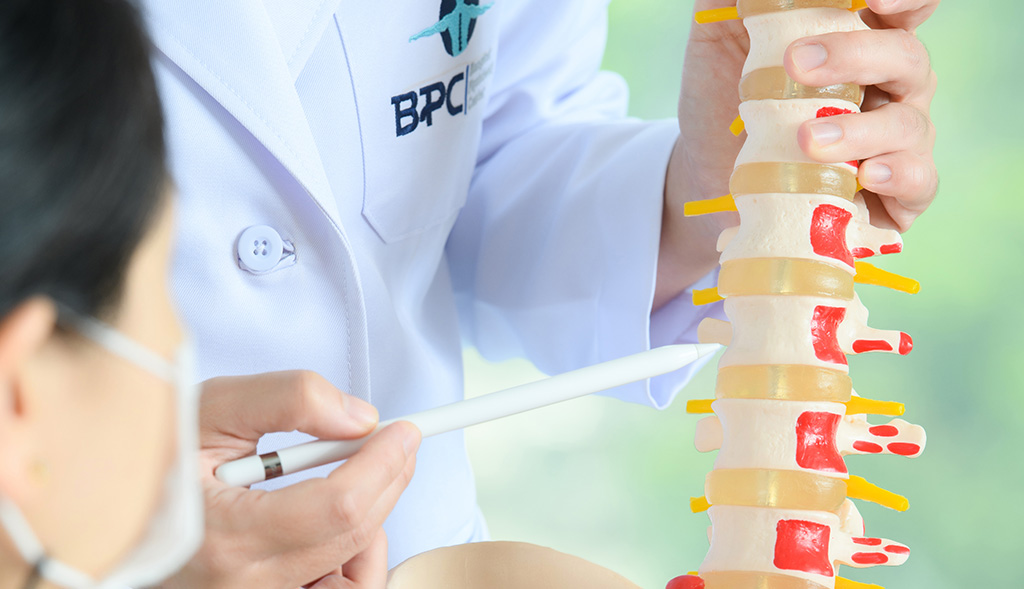
Subtle differences might be more significant than you think, potentially hinting at a condition called mild scoliosis, causing your spine to curve and rotate.
In its early stages, some people may not experience any symptoms. That is why it’s essential to pay close attention. Early intervention and treatment for mild scoliosis can prevent the spinal abnormality from becoming more severe, making physiotherapy far more effective.
Ignoring these symptoms, however, can be detrimental as they can lead to chronic back pain, poor posture, and severe complications.
If you believe you may have mild scoliosis, our highly specialised physiotherapists at BPC Physio are here to help you manage your symptoms.
Table of Contents
What is Mild Scoliosis?
Mild scoliosis is a spinal curvature that is less than 20 degrees and is most often diagnosed in adolescents, though it can also be present in infants and adults.
In contrast, moderate scoliosis is defined by a curve measuring between 25 and 40 degrees. Beyond that, a spinal curvature exceeding 40 degrees is classified as severe scoliosis. When you reach this level, treatment becomes more complex, resulting in more invasive interventions.
If you’re noticing an ‘S’ or C-shaped curve in your spine, that’s enough reason to get curious and seek a healthcare professional for an early check-up.
When it comes to medical conditions, it’s better to be safe than sorry.
Common Symptoms of Mild Scoliosis
Because many people don’t feel pain or discomfort, it can be difficult to detect mild scoliosis. However, here are some symptoms to keep an eye out for:
- Uneven shoulders or hips
- Back pain
- Clothes hanging from your body
- Difficulty walking because of changes in gait
- Issues with balance and coordination
- Uneven posture
Benefits of Early Physiotherapy and Exercise-Based Treatments
One of the most effective ways to address mild scoliosis pain is physiotherapy.
Our specialised physiotherapists at BPC Physio will guide you through ways to reduce mild scoliosis pain through the following:
- Correct your posture
Improving spinal alignment is essential to alleviate your pain. Physiotherapy will offer you exercises to strengthen your back, neck, and shoulder muscles.
- Build your core strength
The abdominal muscles, obliques, and back extensors help stabilise your spine, easing off some pressure from your back. It can also help with your posture.
- Improve your flexibility
Your physiotherapist will provide you with specific stretches to help reduce discomfort by releasing tension and offering a better range of motion.
- Alleviate pain
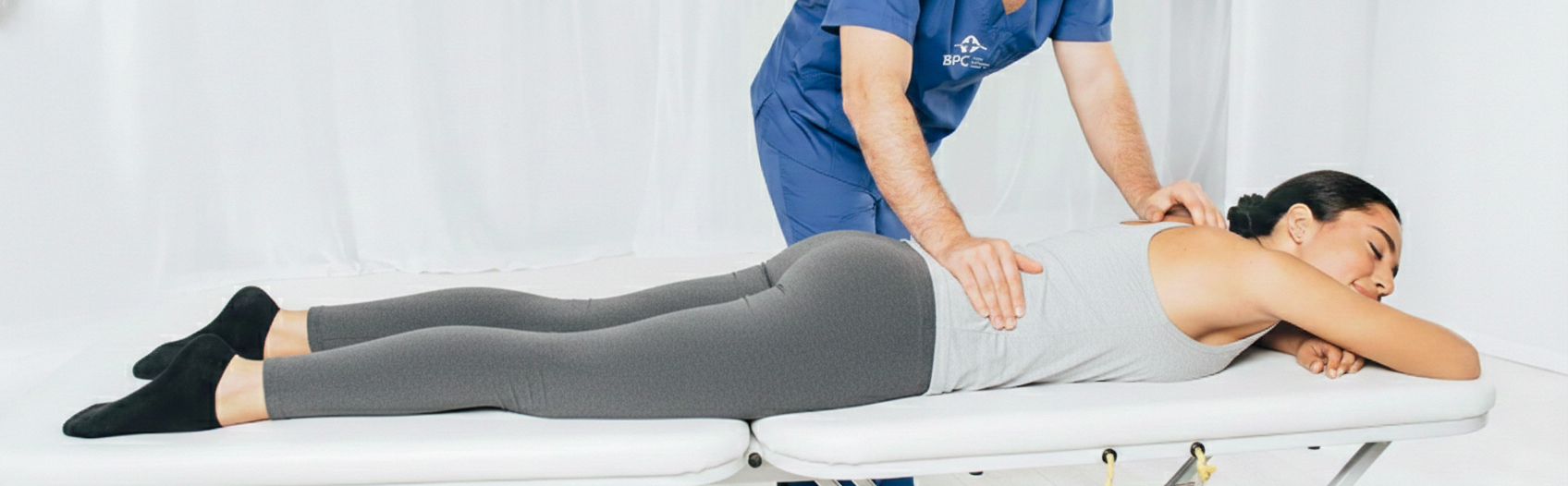
Along with exercise, physiotherapy techniques such as manual therapy and massages are a great way to reduce any pain.
- Improve your mobility
Lastly, early physiotherapy can effectively improve your mobility, allowing you to move through your day with more freedom and less restriction.
Book your Appointment at Bangkok Physiotherapy Centre
When it comes to mild scoliosis symptoms, not everyone will have the same experience. When you detect it early, the possibilities of treatment are far and wide. Physiotherapy becomes more effective, managing your pain, if any, becomes easier, and you can prevent further progression.
Timely intervention for scoliosis can change the course of your mild scoliosis treatment, alleviate pain, and give you peace of mind. Contact us today to schedule your scoliosis appointment with one of our physiotherapists!