Key Takeaway:
- Shockwave therapy uses high-energy acoustic sound waves to break down stubborn muscle knots, stimulate blood flow, and trigger natural tissue repair.
- This non-invasive therapy targets chronic conditions including office syndrome, back pain, plantar fasciitis, and persistent tendon injuries.
- Shockwave therapy is ideal for active individuals seeking non-surgical care and patients who haven’t found relief from traditional treatments.
- Sessions take just 5–10 minutes per area with zero required downtime.
Navigating everyday life with office syndrome or any kind of muscle pain can feel aggravating.
You can participate in daily activities, but that constant ache in your neck or shoulders persists, leaving you unable to fully enjoy the moment.
If this sounds familiar, it may be time to look into Shockwave Therapy (also known as Extracorporeal Shockwave Therapy, or ESWT).
Many people hear shockwave therapy and assume it’s an intense, painful treatment that involves sending electric currents through the body. Rest assured, it has nothing to do with electric shocks. This treatment actually uses high-energy acoustic sound waves on the part of the body that needs relief from pain.
In this blog, we’ll walk you through how the process works, who benefits most, and how it can help your recovery.
How Does Shockwave Therapy Work?
When muscle knots or tendon issues become chronic, like the upper back tension caused by long hours sitting at a desk, blood circulation to that area drops. Over time, your body gets stuck in a cycle of incomplete healing, leaving behind painful scar tissue and stiff trigger points.
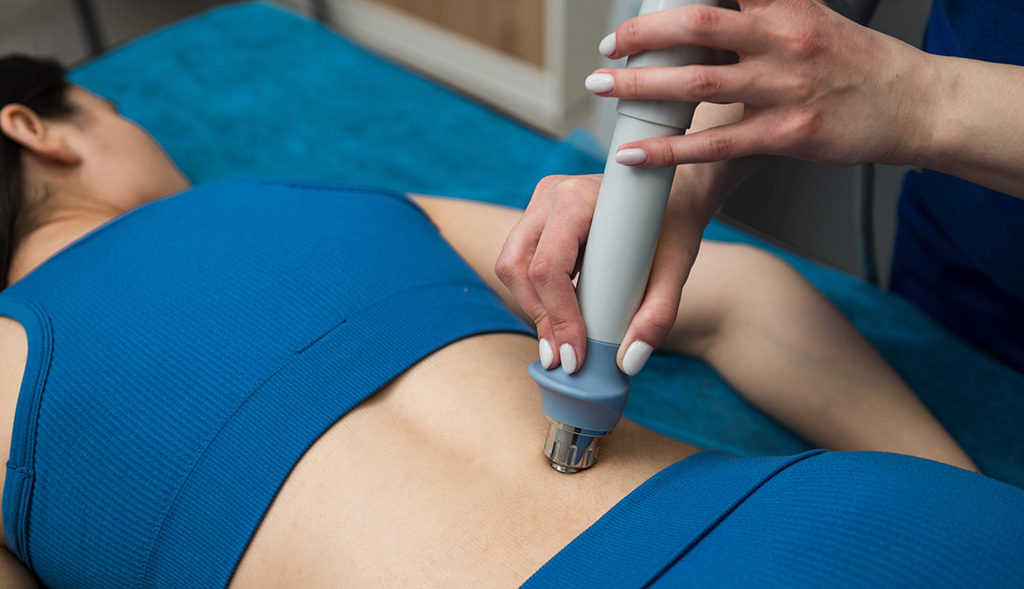
During your appointment at a physio clinic, your physiotherapist will apply a special coupling gel to your skin and glide a handheld applicator over the targeted area. As the device delivers rapid acoustic sound waves deep into the tissue, it triggers the following reactions:
Restarts tissue repair
Stimulates stiff tissue to wake up your body’s natural healing response.
Increases blood flow
Opens new micro-blood vessels to flood tight muscles with oxygen and nutrients.
Breaks down knots
Physically disrupts stubborn scar tissue and muscle knots so they can finally release.
What Conditions Can Shockwave Therapy Help Treat?
Living with ongoing discomfort can be incredibly frustrating, especially when rest or stretching hasn’t brought any muscle pain relief. Shockwave therapy is designed for these stubborn, long-term issues:
Chronic Tendon and Muscle Conditions
Acoustic energy restarts the body’s natural healing process in worn-down tendons that haven’t responded to rest.
Heel Pain and Plantar Fasciitis
Acoustic pulses soothe micro-tears in the arch of your foot to ease sharp, persistent heel pain.
Shoulder, Neck, and Back Pain
Targeted sound waves break up stubborn muscle knots and relieve tension built up from desk work.
Who Is a Good Candidate for Shockwave Therapy?
While shockwave therapy is versatile, it offers the greatest benefits to individuals dealing with specific types of persistent pain. You may be an ideal candidate if you fit into one of these categories:
People with Persistent Pain That Hasn’t Improved
Acoustic wave therapy offers a new solution for patients who haven’t found relief through traditional physical therapy or medication.
Active Individuals Seeking Non-Surgical Options
Non-invasive treatments allow athletes and active adults to address underlying injuries without undergoing surgery or taking lengthy periods off their sport.
Patients Recovering from Chronic Soft Tissue Injuries
Targeted pulses stimulate the healing cycle in old, stubborn scar tissue that has plateaued during standard recovery.
What Should You Expect During and After Treatment?
Maybe you’ve been considering shockwave therapy for a while now, but you’re not sure what to expect. Knowing what happens in the clinic can alleviate those anxieties and help you feel more prepared.
Whether you’re treating stubborn tightness from office syndrome or receiving targeted physiotherapy for back pain, your therapist can easily adjust the intensity to keep you comfortable. Active treatment takes just 5 to 10 minutes per area.
Once the session is over, you can immediately return to your day with zero downtime. You might notice instant relief or experience a mild ache similar to post-workout soreness for 24 to 48 hours. Long-term healing builds progressively over 3 to 6 weekly sessions.
When Should You Consider Seeing a Physiotherapist?
If you find yourself struggling to get through the day without persistent aches and pains, it’s important to seek targeted care as soon as possible. You don’t have to settle for a life of limited mobility and discomfort.
Booking a session at Bangkok Physiotherapy Center is a great first step. With our new Sanam Pao clinic and our flagship clinic in Sukhumvit 39, we’re ready to help you get back on your feet. From chronic back pain treatment to specialized care for office syndrome, our experienced physiotherapists will create a custom treatment and exercise plan to meet your specific needs.
Contact us to book your appointment today.
FAQs
How many Shockwave Therapy sessions do I need?
Most patients require 3 to 6 sessions, spaced about one week apart. Chronic conditions like office syndrome or long-term plantar fasciitis may take a few extra visits, which your physiotherapist will adjust based on your progress.
How long does it take to see results from Shockwave Therapy?
You may notice immediate pain relief and looser muscles after your first session. However, long-term healing builds over 2 to 4 weeks as the acoustic waves stimulate new blood vessel growth and ongoing tissue repair.
Should Shockwave Therapy be combined with physiotherapy exercises?
Yes, this combined approach delivers the best results. Shockwave therapy resets the damaged tissue and relieves pain, while targeted exercises build muscle strength and correct posture to keep the pain from returning.